Lakshmi Puja Bhog and Prasad Items: What to Offer
Lakshmi Puja bhog choices include kheel-batasha, kheer, laddoo, fruit, coconut, panchmeva and mishri. These foods feature in Diwali offerings, while regional festival menus can differ. Choose your items, then count the people receiving prasad.
Lakshmi Puja Bhog and Prasad Items List
Choose from the foods below; you do not need every item. Buy ingredients intended for eating when you will share the offering.
Bhog, Naivedya and Prasad
Bhog (भोग) is food you offer to the deity during worship. Naivedya (नैवेद्य) is the ritual term for the food offering.
Once offered, you receive and share the food as prasad (प्रसाद). A bowl of kheer, for example, becomes prasad after the offering.
Set aside a small bowl from a larger batch for the puja plate. Include the food you intend to distribute when making the offering, following your puja custom. The plate does not need to hold every serving.
Choosing Foods for the Bhog Plate
Kheel, Batasha and Mishri
Kheel (खील) consists of light, crisp grains of popped paddy. Batasha (बताशा) is a small sugar sweet; batashe (बताशे) is the Hindi plural. Diwali offerings can include the two together.
Mishri (मिश्री) is sugar in crystal form. Its shape and texture differ from those of batasha.
Moisture softens kheel and batasha; add them close to offering time. Pack them separately from kheer, cut fruit and Panchamrit. Use dry bowls for these foods when arranging the plate.
Kheer, Laddoo, Peda, Barfi and Halwa
Rice kheer is one option for Lakshmi Puja bhog. Set aside a small offering bowl and portion the remaining batch for distribution. Check that the fridge has space if you will prepare kheer early.
Boondi laddoo and besan laddoo come in individual pieces. Peda and barfi also allow you to count portions before serving.
Peda commonly contains khoya (खोया), milk cooked down into solids. Barfi recipes vary, including versions made from milk, coconut, besan or nuts. Check the recipe when choosing sweets for someone avoiding a particular ingredient.
Suji (सूजी) is wheat semolina, and atta (आटा) is wheat flour. Both can be used for halwa and both contain wheat. Check fasting restrictions separately before serving halwa to someone observing a vrat.
Fruit and Coconut
Bananas, apples and pomegranates are fruit options for the offering plate. Select fresh, undamaged fruit and wash it before arranging the offering. Cut fruit close to serving time and refrigerate prepared pieces until needed.
Gari (गरी) is the white flesh inside a coconut. Fresh coconut has moist flesh, while dried gari is firmer. Choose the form you intend to offer and prepare pieces for sharing.
Panchmeva and Makhana
Panchmeva (पंचमेवा) combines five selected foods, such as nuts, dried fruit, coconut and makhana. The ingredients differ between mixes; check the packet before buying.
Satvikly Panchmeva contains makhana, dried dates (छुहारा) and dried coconut (सूखी गरी). Almonds (बादाम) and raisins (किशमिश) complete its five-item mix.
You can also offer individual foods without buying a mixed packet. Separate bowls allow guests to select portions of almonds, raisins or makhana.
Makhana is a popped seed from the fox-nut plant, Euryale ferox. Kamal gatta (कमल गट्टा) is seed from the sacred lotus, Nelumbo nucifera. These are different plants; choose edible popped makhana for this food offering.
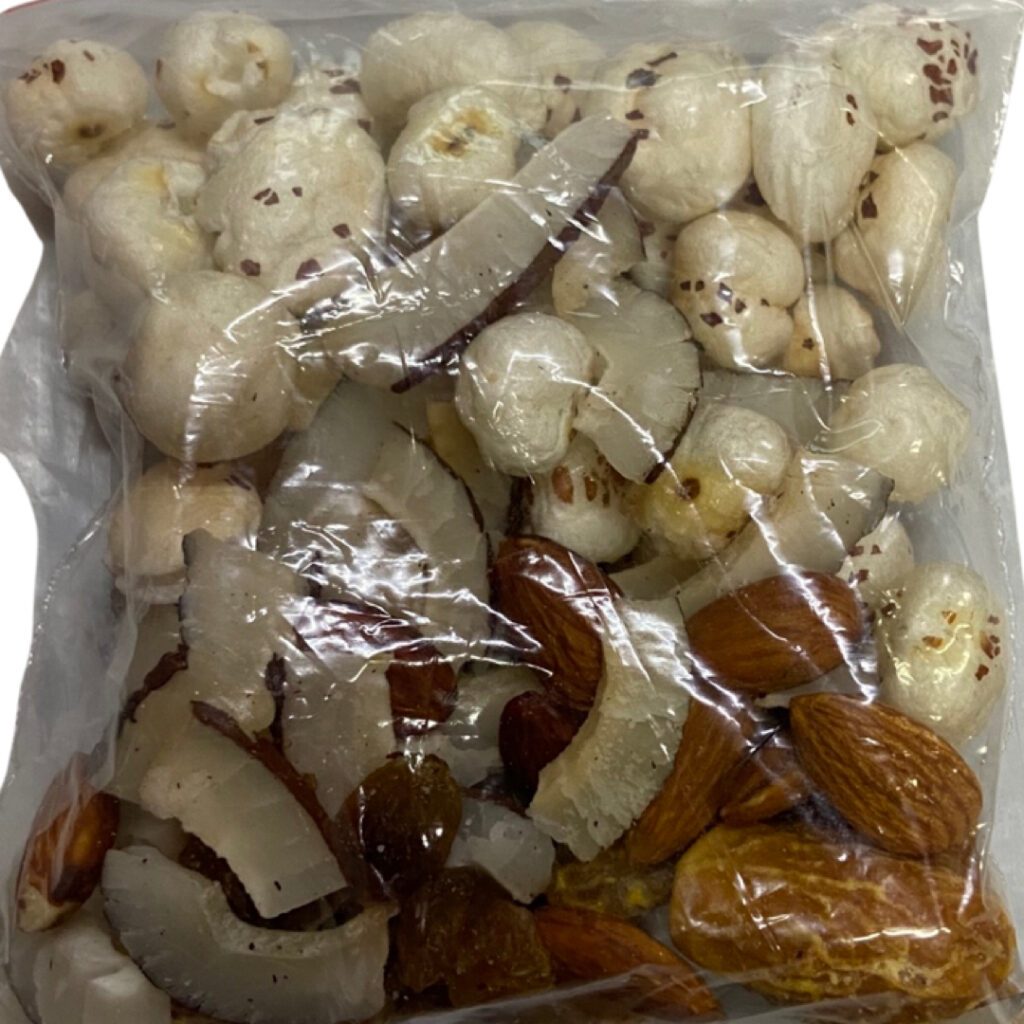
One ready bhog option
Check the Panchmeva Mix
Satvikly Panchmeva combines makhana, dried dates, dried coconut, almonds and raisins. Review the product ingredients before adding it to your offering plate.
View PanchmevaFood Offerings and Other Puja Materials
Some materials beside the bhog plate have a separate ritual use. Arrange the following items according to their role in the ceremony.
Panchamrit
Panchamrit (पंचामृत) contains milk, curd, ghee, honey and sugar. Some procedures use it for abhishek (अभिषेक), the ritual bathing of the deity. You can prepare a separate portion to offer and share as prasad.
Prepare the serving portion in a clean food container. Do not add liquid containing puja powders or lamp residue to it. Refrigerate Panchamrit if you prepare it in advance.
Coconut on the Kalash
The kalash (कलश) is the pot arranged for worship. A coconut placed on it has a ceremonial role. Prepare separate coconut pieces for prasad without opening that coconut during the ceremony.
Paan-Supari and Akshat
Paan-supari (पान-सुपारी) refers to betel leaf and areca nut. Some sequences offer it as tambula (ताम्बूल) after naivedya and the water offering. Arrange it separately from the sweets you will distribute.
Akshat (अक्षत) is unbroken rice used in worship. Separate rice mixed with kumkum, colour or other puja materials from edible prasad.
Preparing Bhog Before the Puja
Decide what you will offer before buying or cooking. Check the ceremony time and refrigeration available for milk-based foods.
Before preparing the offering:
Follow your puja custom on tasting food before the offering. If tasting is permitted, use a fresh spoon each time.
Check the label when buying packed sweets for the puja. For loose sweets, confirm the same details with the seller:
How Much Prasad to Prepare
Count everyone receiving prasad, including people served later. The offering portion can come from this total and be shared after worship. Add extra only for portions you will reserve separately or additional visitors.
For 10 people receiving 1 laddoo each, prepare 10 laddoos. You can place 1 on the offering plate and distribute it after worship. This avoids counting the same serving twice.
For an example kheer portion of 50 ml per person, 10 people need 500 ml. Set aside the offering bowl from that batch if you will distribute it afterwards. The 50 ml portion is a serving example, not a ritual requirement.
Count serving cups, plates and spoons alongside the food portions. Include staff or guests receiving prasad after the main gathering.
How to Offer Bhog to Maa Lakshmi
Have the plate ready when the puja reaches naivedya. If a pandit conducts the worship, confirm when the offering will take place.
A short prayer for the offering
“Maa Lakshmi, please accept this food offering.”
Taking Bhog to a Shop or Office
Pack wet and dry foods in separate covered containers. Carry serving cups, plates, spoons and a ladle if you are distributing kheer.
Transport chilled kheer in a sealed container inside an insulated cooler with ice packs. At the venue, refrigerate it or maintain chilled storage in the cooler until needed. A fridge thermometer can help you check the temperature inside the cooler.
If chilled storage is unavailable, choose whole fruit or suitable dry offerings. Check packet directions before including sweets that might need refrigeration. Avoid selecting milk-based foods without arranging the storage they require.
Bengali Lakshmi Puja Bhog
Bengali Kojagari Lakshmi Puja takes place on Sharad Purnima. This is a separate festival occasion from Diwali Lakshmi Puja. Its food offerings can include cooked dishes as well as sweets.
Khichuri (खिचुड़ी) is a cooked rice-and-dal dish. A menu can pair it with labra (लाबड़ा), a mixed vegetable preparation.
Sweet offerings can include narkel naru (नारकेल नारू), coconut sweets. Rice payesh (चावल का पायेश) is a milk-based rice pudding. Select the dishes used for your Kojagari Puja before buying ingredients.
For a community offering, confirm the menu and headcount with the organiser. Arrange serving ladles, plates and bowls when the bhog includes a cooked meal.
Frequently Asked Questions
Is kheer required for Lakshmi Puja?
No, kheer is one option for Lakshmi Puja bhog. You can select fruit, laddoo or other foods from the offering list. A specific family observance may have its own customary menu.
What can I offer if I cannot cook?
Choose fruit, kheel-batasha, mishri, panchmeva or ready-made sweets. Check ingredients and storage directions before buying food for the offering.
How long should the bhog plate remain before the deity?
The duration depends on the puja sequence you follow. Complete the naivedya step before removing the plate. Confirm any customary waiting period with the person conducting your worship.
Must bhog always be sweet?
No, some Bengali Lakshmi Puja menus include cooked dishes such as khichuri. Select the menu for the festival you are observing.
Is bhog the same as food eaten during fasting?
Bhog is an offering, while fasting rules govern what a person may eat. Check the ingredients allowed for the specific fasting observance. Wheat halwa or a flour-based laddoo is not automatically suitable for fasting.
Can I prepare bhog a day before the puja?
Yes, if your puja custom permits advance preparation. Portion dry offerings and store them according to packet directions.
Prepare kheer early only if you can refrigerate it promptly and continuously. Cut fruit close to the offering time and refrigerate prepared pieces until needed.