
Deliver in next 3 to 7 days
TRENDING
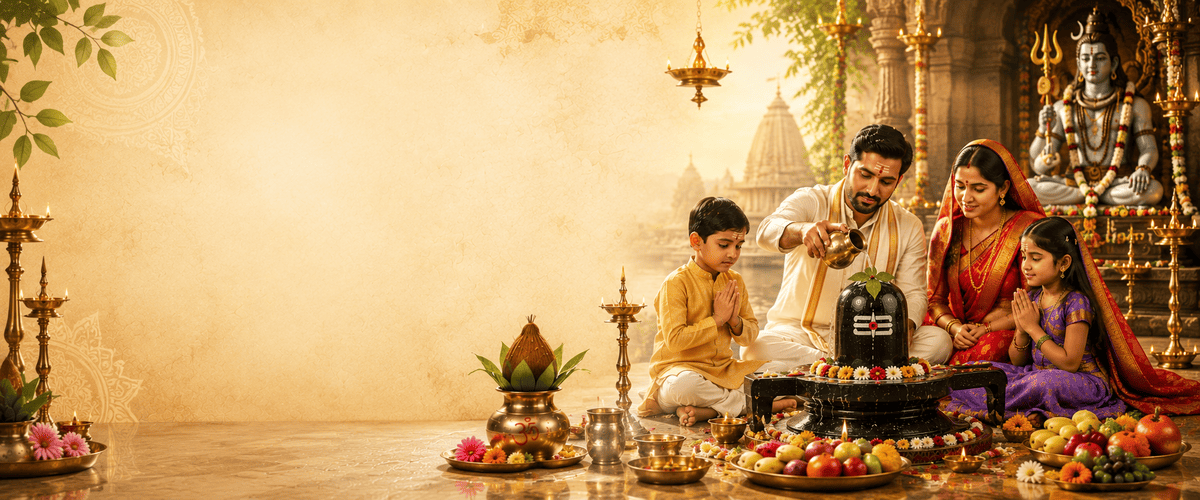
Rudrabhishek is a Vedic ritual dedicated to Lord Shiva. During Rudrabhishek puja, you pray to Lord Shiva in Rudra form (रुद्र रूप). You use Ganga jal, honey, milk, Panchamrit, curd, and Bel Patra on Shivling. Rudrabhishek mantras come from Sri Rudram and Rudrashtadhyayi in Yajurveda. Rudrabhishek includes prayers for fewer life problems, less Rahu Ketu dosha effect, good health, and spiritual growth. Each Rudrabhishek type changes the samagri, time, Havan needs, and Puja steps.
Sampooran Rudrabhishek Puja Kitरुद्राभिषेक पूजा शुरू करने से पहले
Before Rudrabhishek Puja, fix the place, prayer reading, Havan, and time. The Puja type sets the samagri, steps, and total preparation time. Follow one approved list from family tradition or an Acharya.
Place a wide tray, floor cloth, and safe Havan area.
Ask about accepted items, timing, and Shivling access.
Full Vedic reading needs a trained reader, longer prayers, and more preparation time. Buy fresh items near the Puja date, then check every packet early.
रुद्राभिषेक पूजा क्या है?
Rudrabhisheka (Sanskrit: रुद्राभिषेक) is a powerful Hindu ritual for Lord Shiva. The name combines two Sanskrit terms, Rudra and Abhisheka. Rudra is a Vedic name for Lord Shiva. Abhisheka is the Puja step where Jal, milk, or Panchamrit flow over Shivalinga.
You perform Rudrabhisheka on Shivalinga while reading Shiva mantras. Rudrabhishek Puja may include Sri Rudram or Rudrashtadhyayi from the Yajurveda. Hindu tradition sees Rudrabhishek as a prayer for Lord Shiva blessings and wishes coming true. You may also pray for peace, health, protection, and spiritual growth.
A prayer for fewer life problems, relief from Rahu-Ketu dosha, good health, and a deeper bond with Lord Shiva — each Rudrabhishek type changing the samagri, timing, Havan needs and puja steps.
रुद्राभिषेक, जलाभिषेक और शिव पूजा में क्या अंतर है?
Jalabhishek, Rudrabhishek, and Shiva Puja are three different Shiva worship methods. Jalabhishek uses water, while Rudrabhishek uses Vedic prayers and more samagri. A full Shiva Puja may include Jalabhishek or Rudrabhishek.
जलाभिषेक
Jalabhishek uses Jal (जल) or Gangajal (गंगाजल) for Shivling Abhishek. The prayer Om Namah Shivaya (ॐ नमः शिवाय) may continue during Jalabhishek. Bel Patra (बेलपत्र) and flowers may follow after Jalabhishek. Daily home worship may use Jalabhishek with fewer Puja items.
रुद्राभिषेक
Rudrabhishek uses Jal, milk, curd, honey, Ghee, or Panchamrit. Shiva mantras continue during the Shivling Abhishek. Some Rudrabhishek types continue with Havan after Shivling Abhishek. Rudrabhishek needs more samagri, vessels, time, and Puja steps. The exact list changes with the selected Rudrabhishek type.
शिव पूजा
Shiva Puja is the full worship of Lord Shiva. A full Shiva Puja may include Jalabhishek or Rudrabhishek. Flowers, Dhoop (धूप), Deep (दीप), fruits, prasad (प्रसाद), and Aarti (आरती) form part of Shiva Puja. Daily Shiva Puja may remain short, while larger Puja uses more steps.
अधिकतर रुद्राभिषेक प्रकारों में क्या समान रहता है?
Most Rudrabhishek types have the same basic Puja parts. Shivling Abhishek, Jal, Shiva prayers, Sankalp, Bel Patra, and Aarti remain common. Milk, Panchamrit, Havan, and extra vessels depend on the Rudrabhishek type.
Shivling (शिवलिंग): The Puja takes place before a Shivling.
Jal (जल): Jal starts the Abhishek before other Puja items.
Shiva prayers: Short home Rudrabhishek uses Om Namah Shivaya (ॐ नमः शिवाय). Full Vedic Rudrabhishek uses Sri Rudram (श्री रुद्रम), Namakam, and Chamakam.
Sankalp (संकल्प): Sankalp states the prayer purpose before the Puja begins.
Final Puja: Bel Patra, flowers, Aarti, and final prayer complete the worship.
रुद्राभिषेक पूजा कब करनी चाहिए?
You can perform Rudrabhishek Puja on any chosen prayer day. Monday, Sawan, Mahashivratri, Pradosh, and Masik Shivratri are common choices. Personal Sankalp dates also mark family prayer and major life events.
Monday (सोमवार) has a strong place in Lord Shiva worship. Use Monday for weekly Rudrabhishek, Somwar Vrat, or family prayer.
Sawan (श्रावण) is a major month for Lord Shiva worship. Sawan Mondays bring fasting, Jalabhishek, and Shiva prayer together. Sawan dates change across regional calendars in India.
Mahashivratri (महाशिवरात्रि) marks the great night of Lord Shiva. Rudrabhishek forms part of many Mahashivratri night prayers. Choose one Puja or four Prahar (प्रहर) under your family method. Check local Panchang timing before planning each Prahar.
Pradosh Vrat (प्रदोष व्रत) falls on Trayodashi (त्रयोदशी) twice each lunar month. Use Pradosh Kaal (प्रदोष काल) after sunset for Shiva Puja.
Masik Shivratri (मासिक शिवरात्रि) comes once each lunar month. Masik Shivratri falls on Krishna Paksha Chaturdashi (कृष्ण पक्ष चतुर्दशी). Plan monthly Rudrabhishek on the Masik Shivratri date.
Choose birthdays, anniversaries, marriage dates, or Griha Pravesh for personal Sankalp. Personal Sankalp may also mark business opening or a major family decision.
Exact Muhurat (मुहूर्त) changes with Tithi (तिथि), Nakshatra (नक्षत्र), location, and family method. Check the local Panchang before buying fresh samagri or planning travel.
रुद्राभिषेक में कौन से मंत्र पढ़े जाते हैं?
Rudrabhishek mantras change with the selected Puja type. Short home Puja uses Om Namah Shivaya during Shivling Abhishek. Full Vedic Rudrabhishek includes Sri Rudram or Rudrashtadhyayi.
Om Namah Shivaya is a common Shiva prayer. Namah Shivaya has five parts: Na, Ma, Shi, Va, Ya. Adding Om makes the full mantra six parts. Read it during Jal, milk, or Panchamrit Abhishek.
Mahamrityunjaya Mantra begins with Om Tryambakam Yajamahe. Read it while praying for health, protection, and long life. Count its readings separately from Sri Rudram.
Rudra Gayatri begins with Om Tatpurushaya Vidmahe. Some Puja methods add Rudra Gayatri after the main Shiva prayers.
Sri Rudram contains Namakam and Chamakam. Namakam contains many direct prayers to Rudra. Chamakam follows Namakam within the full Sri Rudram reading.
Rudrashtadhyayi follows the Shukla Yajurveda reading method. A Vedic reader (वेदपाठी) reads each mantra with correct sound and pace.
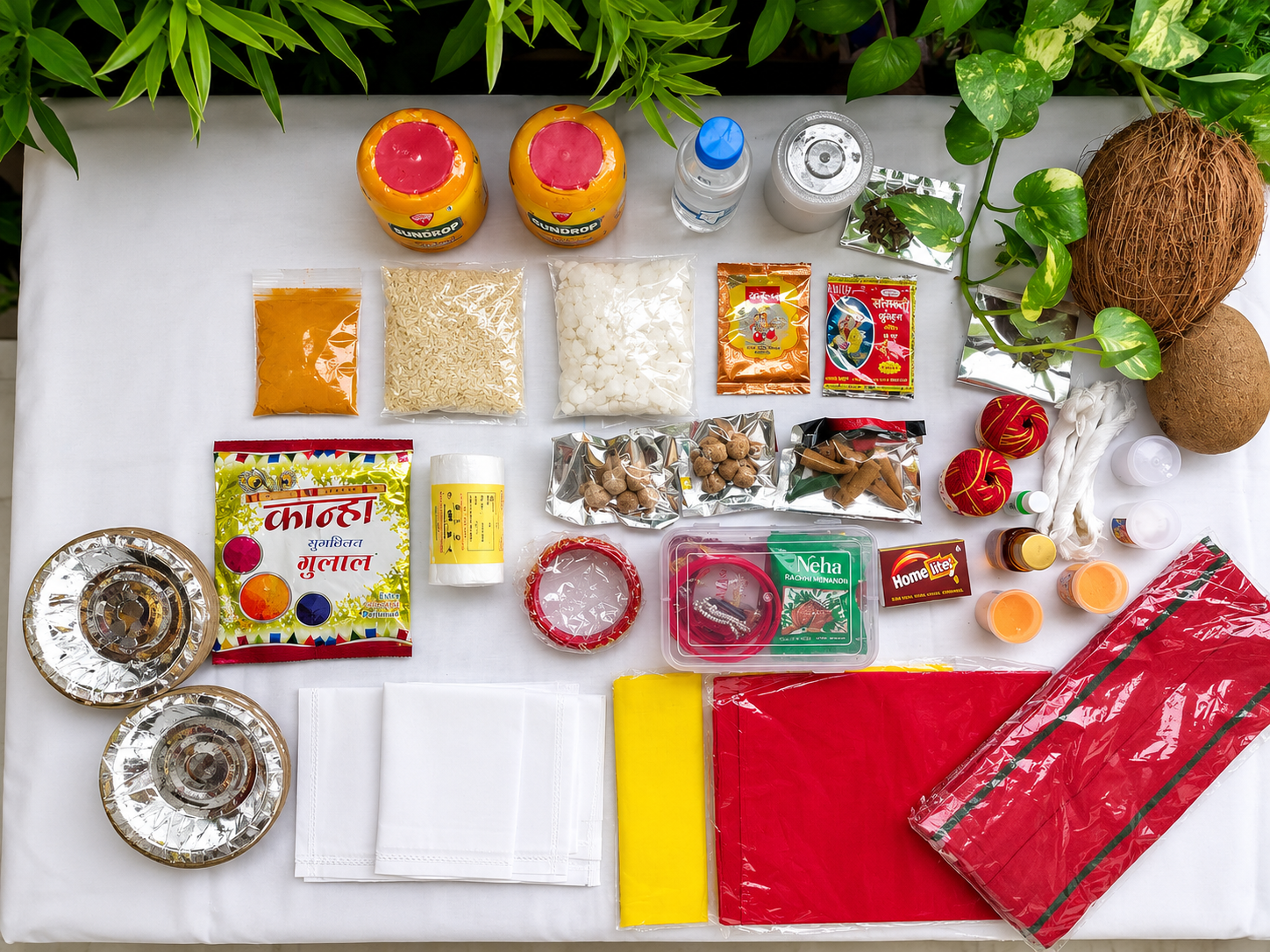
Choose the perfect Rudrabhishek Puja Kit starting at just ₹751.00. Each kit includes authentic, Pandit-verified puja samagri packed in the right quantities for a smooth and hassle-free Shiv Puja. Simply arrange fresh offerings like flowers, fruits and milk before your puja.
रुद्राभिषेक पूजा में क्या होता है?
Rudrabhishek Puja starts with Dhyana and Sankalp before Shivling Abhishek. Jal comes first, then milk, curd, honey, Ghee, and Panchamrit. Shiva mantras continue through Abhishek before Bel Patra, Bhog, Aarti, and prayer.
Havan (हवन): Havan appears only in Rudrabhishek forms with fire worship. Check the Puja type before arranging Havan samagri.
Opening prayers and added Puja items can change across homes and temples.
रुद्राभिषेक पूजा सामग्री
Rudrabhishek samagri has setup, Abhishek, Shiva Puja, Aarti, and Havan groups. The final list changes with Puja type and family Puja rules. Follow one list from family elders, temple rules, or Acharya.
Add Havan items only when the Rudrabhishek type includes Havan.
रुद्राभिषेक में शिवलिंग पर क्या चढ़ाएं?
Rudrabhishek places different items on the Shivling at different points. Jal starts the Abhishek and finishes the liquid steps. Milk or Panchamrit comes between both Jal steps when included.
Begin with clean Jal or Gangajal on the Shivling.
Use milk or prepared Panchamrit under the selected Vidhi. Separate ingredients belong only where the Puja steps require them.
Place Bel Patra and flowers after the final Jal rinse. Chandan, Akshat, or Bhasma follow where family rules include them.
Dhatura, Bhang, coconut water, and sugarcane juice need prior approval. Temple rules can limit outside Puja items and liquids.
रुद्राभिषेक पूजा के लाभ
Rudrabhishek Puja focuses on Shiva prayer, peace, and spiritual growth. The Sankalp can include health, family, work, and Jyotish needs.
These points come from Hindu faith and Jyotish practice. Results can differ for every person and family.
रुद्राभिषेक घर पर करें या मंदिर में?
You can perform Rudrabhishek at home or in a Shiva temple. Home Puja allows more time, privacy, and family involvement. Temple Puja follows booking times, item rules, and family limits.
| Point | Home Rudrabhishek | Temple Rudrabhishek |
|---|---|---|
| Puja time | Choose a family time with enough preparation and cleaning | Follow the booked time and temple opening hours |
| Shivling | Arrange a Shivling, wide tray, and safe Puja place | Use the Shivling area shown under temple rules |
| Samagri | Arrange every required item before the Puja begins | Ask which Puja items the temple provides |
| Milk and Panchamrit | Buy fresh milk and prepare the required Puja items | Check temple rules before bringing milk or Panchamrit |
| Prayers | Use family prayers or arrange a Vedic reader | Temple staff arrange the available priest or Vedic reader |
| Family members | Family members can join within the available home space | Booking rules may limit how many family members join |
| Havan | Prepare a safe fire area when Havan forms part | Temple rules decide Havan access and fire space |
| Cleaning | Wash every vessel and clean the Puja place afterward | Temple workers clean the Puja area after worship |
Before temple booking, check fees, included items, access, and family limits. Before home Puja, check space, vessels, floor cover, and cleaning items.
रुद्राभिषेक पूजा में कौन भाग ले सकता है?
One person, a couple, or a family can perform Rudrabhishek Puja. Home Puja allows family members to share Sankalp and Abhishek. Full Vedic reading needs a Vedpathi (वेदपाठी) for every mantra.
Yajman (यजमान): The Yajman takes Sankalp and leads the family Puja.
Family members: A couple or family can place Jal and Puja items together.
Children: Children can join while adults control Jal, lamps, and Havan fire.
Women: Women can take part under the family or temple custom used.
Temple Puja: Temple rules can limit Shivling access and family numbers.
Family and temple customs differ on fasting, dress, and menstrual periods. Use one family or temple custom before fixing each role. Vedpathi (वेदपाठी): A person who reads Vedic mantras with proper sound and pace.
रुद्राभिषेक में कितना समय लगता है?
A standard Rudrabhishek Puja takes about 1 to 2 hours. The full time includes Sankalp, Shivling Abhishek, Shiva mantras, Aarti, and Prasad. More readers, Havan, and added prayers can increase the total time.
Laghu Rudra, Maha Rudra, and Ati Rudra take much longer. Their time depends on Namakam counts, Chamakam rounds, and Vedpathi (वेदपाठी) count. Large Rudra Puja can continue across several sessions or several days.
Rudrabhishek can finish after Aarti or continue into Havan. A Havan type needs fire items, more room, adult attention, and extra time.
Prepare Abhishek items, Shiva offerings, lamp, food, and prasad.
Add Samidha, Havan Samagri, Ghee, Jau, Kala Til, and fire safety.
Confirm Havan before buying extra fire materials. The chosen type also changes cleanup and ash handling.
Rudrabhishek needs careful preparation. One missing item, one unclear instruction, or one last-minute call can disturb the whole puja setup.
At Satvikly, we help you prepare before the puja day, so you know what to arrange, what to confirm, and what to keep ready. We do not just sell items — Satvikly reduces puja-day confusion.
Arrange as per your list. Our team can help you arrange the items as per your list. No list? We guide you with a Rudrabhishek Puja Kit that includes the main packed items needed for the puja.
Customize for your tradition. If your family tradition needs extra items, we can help customize the kit based on your requirement.
Pandit Ji support. Need help? Satvikly can also connect you with an experienced Vedic Pandit Ji for Rudrabhishek, where the service is available.
Book a verified Vedic Pandit Ji for your Rudrabhishek, where the service is available.



During Jalabhishek, you pour water over a Shivling. Rudrabhishek adds chosen liquids, Rudra prayers, and a longer Puja order. Prayer depth changes samagri, time, and preparation.
You can perform a suitable Rudrabhishek type at home. Prepare a stable Shivling area, collection tray, samagri, and enough time. Full Vedic reading needs support from an experienced Vedic reader.
Choose your type through location, time, prayer depth, participants, and Havan. A home Puja needs fewer items and shorter preparation time. A larger Vedic Puja needs deeper planning.
Milk appears across many Rudrabhishek and Panchamrit practices. Water based worship may use fewer liquids. Follow your chosen Vidhi and avoid food waste.
Havan appears only inside selected Rudrabhishek types. Confirm Havan before buying fire materials or preparing fire space. A home Abhishek may finish after Aarti and the closing prayer.
Prayer choice changes with the selected Puja type. Home worship may use Om Namah Shivaya. Full Vedic practice may use Shri Rudram or Rudrashtadhyayi.
Time changes with prayers, Havan, people, and location. Add preparation and cleaning around the worship period. Ask the trained reader for planned timing.
Rudrabhishek may happen on several suitable days. Monday, Pradosh, Sawan, and Shivratri receive common preference. Local calendar details may affect your date.
Samagri lists change with prayers, Havan, location, and family practice. A short home Puja needs fewer items. Confirm the Puja type before buying materials.
You want the puja to happen with faith, peace, and the right samagri. But small items are easy to miss. Every Pandit Ji may follow a slightly different list. Your family tradition may also need a few extra items. Satvikly helps you prepare before the puja day. Share your list, choose a Rudrabhishek Puja Kit, or ask for custom samagri as per your ritual need. Arrange the right samagri, sit with faith, and offer Rudrabhishek to Lord Shiva with a clean heart and full devotion.
Plan My Rudrabhishek Puja Order on WhatsApp