Satyanarayan Puja Vidhi Step by Step
The Satyanarayan puja vidhi starts with preparation and Sankalp. Ganesh Pooja, Kalash Sthapana, main worship, 5 Katha Adhyay, Aarti, closing prayers, and Prasad follow.
Shodashopachar (षोडशोपचार) covers 16 main offerings to Lord Satyanarayan. Sankalp, Kalash, Katha, Aarti, and closing prayers are outside that count.
Buy Satyanarayan Pooja Kit →For purpose and Pooja types, read Satyanarayan Pooja. For room and family preparation, use Satyanarayan Pooja at Home.
What to Prepare Before Sankalp
Finish every preparation before lighting the Diya. Keep each material near the Chowki (चौकी) in its order of use.
Keep the Diya on a metal plate. Move cloth, books, and loose flowers away from its flame.
Check the full Samagri section on the Satyanarayan Pooja at Home page. Item quantities can change with guest count and family method.
What the kit covers
Complete Satyanarayan Puja Vidhi in Order
Follow the Pooja order below. Use a small bowl and spoon for every water offering.
Sankalp, Ganesh Pooja and Kalash Sthapana
1
Step 1: Light the Diya and sprinkle water
Light the Diya with Ghee or oil. Sprinkle clean water around the Chowki and Pooja materials.
Perform Achaman (आचमन) when your family method includes it. Follow your Katha book or Pandit Ji for its words.
Keep one plate for used water and flowers. Do not return used water to its main container.
2
Step 2: Take Sankalp
Sankalp (संकल्प) states who is performing the Pooja and why. Hold water, Akshat (अक्षत), and a flower in your right palm.
State the date or Tithi (तिथि), place, name, and Gotra (गोत्र) when known. State the Pooja purpose and decision to complete the Vrat and Katha.
Release the water into a plate after speaking. Ask Pandit Ji for the correct words when Gotra or Panchang details are unknown.
Sankalp comes before the main deity worship. It is not one of the 16 offerings.
3
Step 3: Perform Ganesh Pooja
Apply Chandan or Roli to Ganesh Ji. Place Akshat and flowers, then move Dhoop and Deep before Ganesh Ji.
Complete Ganesh Pooja before the main worship. Recite the short mantra below:
4
Step 4: Set the Kalash
Place rice or another grain below the Kalash. Fill it with clean water and a little Ganga Jal.
Add Akshat, a coin, or Supari when your method uses them. Tie Mauli around the Kalash neck, then place mango leaves.
Place a whole coconut above the leaves. Apply Tilak and place a flower before the Kalash.
Kalash Sthapana (कलश स्थापना) can include Varun Pooja (वरुण पूजा). Follow your Katha book or Pandit Ji for that added worship.
Detailed methods can add Kusha, more grains, herbs, or several leaves. Use them only when your selected method names them.
5
Step 5: Complete added opening worship when included
Some family methods include Navagraha, Lakshmi, or other opening worship. Complete these actions before Lord Satyanarayan worship.
Do not add every opening ritual to every home Pooja. Follow the selected family Paddhati (पद्धति).
16 Shodashopachar Offerings to Lord Satyanarayan
Step 6: Perform Shodashopachar Pooja
Shodashopachar contains 16 offerings to Lord Satyanarayan. Use the related mantra from your Katha book or Pandit Ji. Keep separate water portions for Padya, Arghya, and Achamaniya. Use a spoon and collect each liquid in a plate.
Make Panchamrit with milk, curd, Ghee, honey, and sugar. Use a clean spoon and keep the bowl covered. Fruit, Katha, Aarti, Pradakshina, and Pushpanjali follow these offerings. These actions are outside the 16 Shodashopachar offerings. Keep the Snan order exact for a washable Murti. Use Panchamrit, rinse with water, dry the Murti, then place cloth and Chandan. Wash your hands before touching Naivedya. Keep prepared food covered until it is placed before Lord Satyanarayan.
Katha, Aarti and Closing Pooja Steps
Step 7: Place fruit and Satyanarayan Prasad
Keep one clean Prasad portion before Lord Satyanarayan. Place banana, other fruit, and Tulsi when available.
The Sanskrit Katha names wheat flour, Ghee, milk, banana, and sugar or jaggery. Rice flour can replace wheat flour when wheat flour is unavailable.
Sapada (सपाद) refers to 1¼ of the chosen measure. Choose 1 cup and use 1¼ of that cup. Use 1 clean measuring cup.
Step 8: Read all 5 Katha Adhyay
Seat everyone before starting Satyanarayan Katha. Family members can take turns reading all 5 Adhyay (अध्याय) in order.
Finish cooking before Chapter 1 begins. Continue with Aarti after Chapter 5.
Keep phones silent during the reading. Stop cooking and unrelated conversation until all 5 chapters finish.
Step 9: Perform Satyanarayan Aarti
Light camphor or the Aarti lamp. Move it clockwise before Lord Satyanarayan while singing the Satyanarayan Aarti.
Keep children away from the flame. Place the lamp on a metal plate after Aarti.
Step 10: Complete the closing Pooja actions
Complete the closing order below:
Pradakshina → Pushpanjali → Kshama Prarthana → Namaskar → Dakshina → Panchamrit and Prasad
Perform Pradakshina (प्रदक्षिणा), the clockwise worship movement. Make a small clockwise movement when the room has little space.
For Pushpanjali (पुष्पांजलि), hold flowers while reciting the closing prayer. Place the flowers before Lord Satyanarayan.
Recite Kshama Prarthana (क्षमा प्रार्थना) for any missed action or pronunciation error. Bow before Lord Satyanarayan after the prayer.
Present Dakshina to Pandit Ji when a Pandit conducts the Pooja. Share Panchamrit and Prasad (प्रसाद) with every person present.
Some family methods add Udvasan (उद्वासन) before the final Namaskar. Follow the words and order from your family book or Pandit Ji.
Using a Photo or Murti for Satyanarayan Pooja
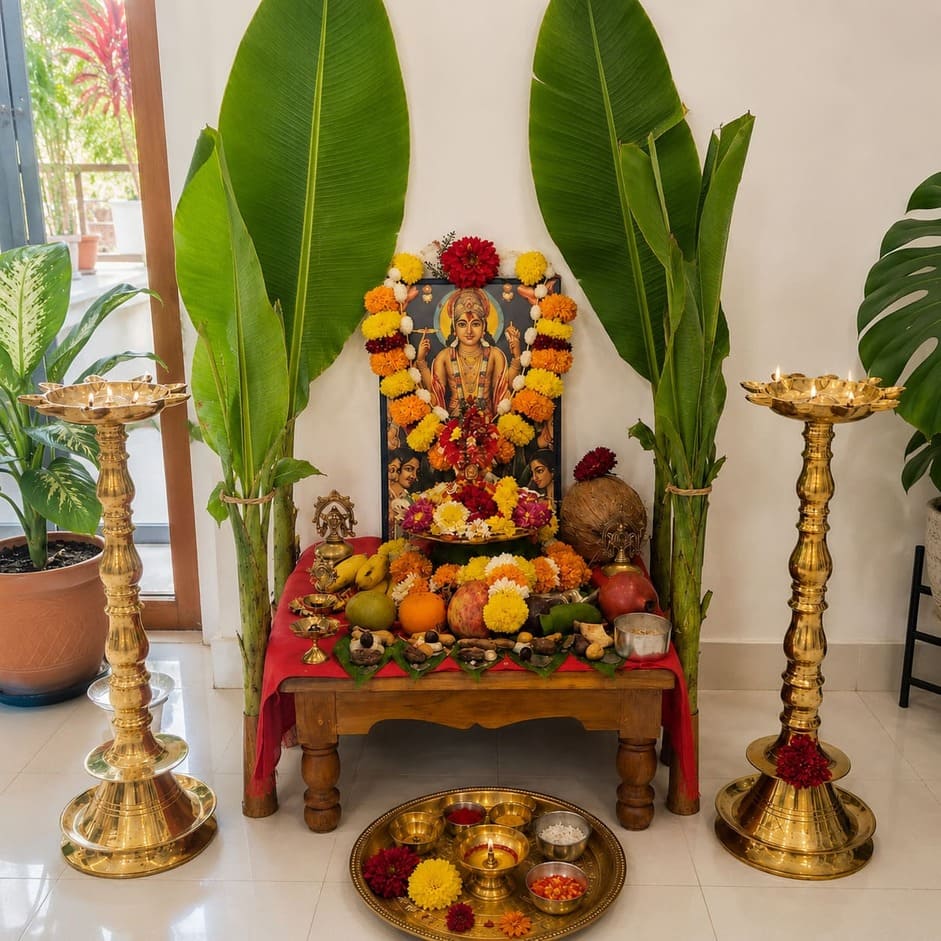
Never use a paper, wooden, or painted Murti for liquid Snan. Check that the Murti is washable before starting.
Liquid Snan is only for a washable Murti. The separate-bowl method protects a framed photo.
When Havan and Navagraha Pooja Are Included
Household method
Many families complete Katha, Aarti, and Prasad without Havan. Havan is outside the 16 deity offerings.
Pandit method
Some Paddhati include Navagraha Pooja or Havan. Pandit Ji decides their order and mantras.
Fire safety
Keep the Havan Kund on a thick metal base. Keep children, cloth, books, and furniture away from the flame. An adult must watch the fire throughout Havan.
Open a window before lighting the fire. Keep water and a metal cover within reach.
How Long Satyanarayan Pooja Takes
Longer mantras and more Katha readers can increase the total. Arrange fresh items and utensils before the planned starting time.
The time range starts after the Pooja area is ready. Room setup and Prasad cooking need extra time.
Can You Perform Satyanarayan Pooja Without Pandit Ji?
A family member can perform a short home method. Keep a checked Katha text, arranged materials, and short mantras ready.
A family member can perform the Pooja when:
Ask Pandit Ji when:
Use short checked mantras throughout the Pooja. Complete Kshama Prarthana during the closing prayer.
Do not perform Havan without an adult who knows the fire method. Ask Pandit Ji when the fire procedure is unfamiliar.
Satyanarayan Pooja Mistakes and Corrections
Satyanarayan Pooja Questions
What is the correct Satyanarayan Pooja order?
The correct Satyanarayan puja vidhi starts with preparation, Sankalp, Ganesh Pooja, and Kalash. Main worship, 5 Katha Adhyay, Aarti, closing prayers, and Prasad follow.
What details are spoken during Sankalp?
State the date or Tithi, place, name, Gotra when known, and Pooja purpose. Also state the decision to complete Satyanarayan Vrat and Katha.
Is Ganesh Pooja performed first?
Yes. Perform Ganesh Pooja after Sankalp and before Lord Satyanarayan worship. Some family methods place added opening worship between Ganesh Pooja and main worship.
Is Kalash Sthapana required?
Kalash Sthapana appears in common Satyanarayan Pooja methods. Its materials and Varun Pooja actions can change with family Paddhati.
How many Satyanarayan Katha chapters are read?
Read all 5 Katha Adhyay in the full method. Keep their order from Chapter 1 through Chapter 5, then perform Aarti.
Can Satyanarayan Pooja be done with a photo?
Yes. Keep water and Panchamrit in separate bowls. Never pour liquids over the photo or place wet Chandan directly on its frame.
Is Havan required in Satyanarayan Pooja?
Havan is not part of the 16 Shodashopachar offerings. Include it when your family Paddhati or Pandit Ji uses a Havan method.
How to do Satyanarayan Puja at home without Pandit Ji?
Use a checked Katha book and arrange every material first. Follow the short home order and ask Pandit Ji about full Sankalp or Havan.
Which day is suitable for Satyanarayan Pooja?
Purnima is a common day, but it is not the only day. Check local Tithi and Muhurat through a Panchang or Pandit Ji.
Is fasting required for Satyanarayan Pooja?
Fasting follows family practice and personal health needs. One strict food rule does not apply to every person performing the Vrat.
What should I do after a missed step?
Complete the step before Aarti when you notice it. Recite Kshama Prarthana during closing and ask Pandit Ji about a major missed action.
What should be done after Satyanarayan Aarti?
Perform Pradakshina, Pushpanjali, Kshama Prarthana, and Namaskar. Present Dakshina when Pandit Ji conducts the Pooja, then share Panchamrit and Prasad.
Order Satvikly products from your phone
Browse puja kits, save your address and track your order through the Satvikly app.


 iOS
iOS
 Android
Scan to download the app
Android
Scan to download the app