
Navratri Havan Samagri Kit for Maa Durga Worship - 1.5kg
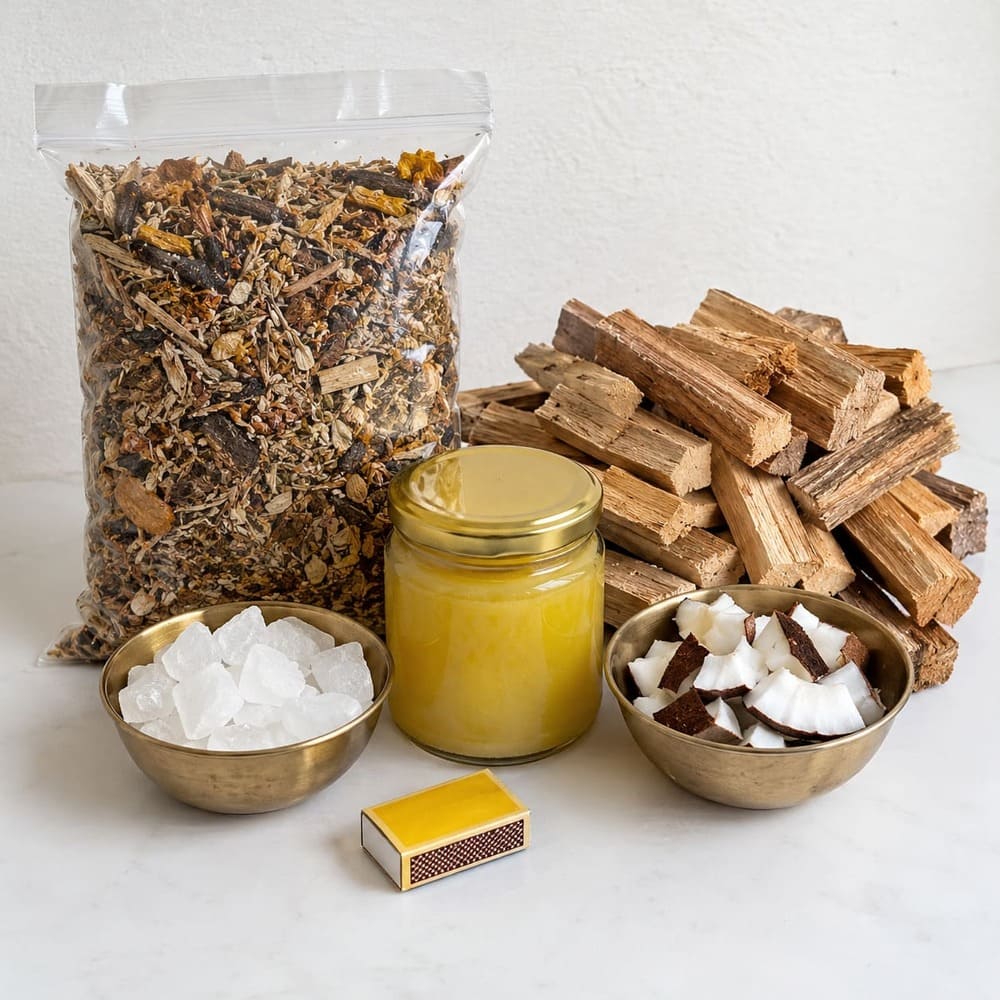
Prepare your home havan with Navratri Havan Samagri from Satvikly. This kit contains offering mixture, mango wood, ghee and lighting materials. You also receive dry coconut pieces for permitted fuel or offerings. Arrange your havan kund, utensils and any ceremony-specific materials separately.
Navratri Havan Samagri Kit brings together 6 materials for Maa Durga worship. It includes 250 g offering mixture and 1 kg mango wood. You also receive ghee, kapoor, dry coconut pieces and a matchbox. Prepare for your Navratri havan with your kund and utensils. Add fresh offerings and other materials from your family puja list.
- ✓6 materials for Maa Durga worship
- ✓250 g offering mixture
- ✓1 kg mango wood samidha
- ✓Ghee, kapoor, dry coconut pieces and matchbox

 100% secure checkout via Razorpay
Navratri Havan Samagri Kit Contents
You receive the following 6 materials in the stated quantities. The offering mixture and wood are supplied as separate components.
Havan kund, utensils and fresh offerings are not included. The kit does not include a Puja Vidhi card or booklet.
Purnahuti (पूर्णाहुति) is the closing offering made during havan. Its materials depend on the method followed for your ceremony. Separate jau (जौ), til (तिल) or purnahuti materials may be needed. Check these additions with your Pandit Ji before ordering.
Havan Materials and Their Uses
Set out the offering mixture, wood and lighting materials separately. Place ghee in its own vessel with an offering spoon.
- Havan samagri for ahuti: Ahuti (आहुति) is an offering placed into the ritual fire. Measure the mixture needed for your session into a clean bowl. Add separate ingredients only when your havan method requires them.
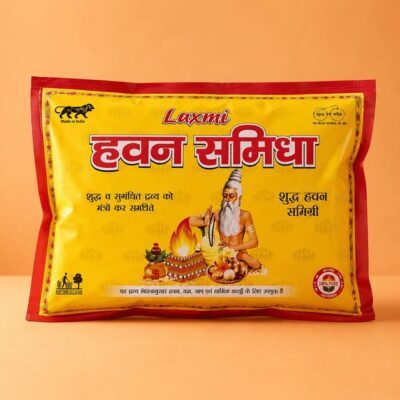
- Mango wood samidha for the fire: Samidha (समिधा) is the wood used for the havan fire. Choose sticks that remain within the sides of your kund. Add wood as directed during the ceremony to maintain the fire.
- Ghee for fire offerings: Ghee is offered into the fire during mantra recitation. Use your offering spoon for the amount specified during worship.
- Kapoor for lighting: Kapoor helps light the wood or dry coconut during fire preparation. Use the supplied form according to its lighting instructions.
- Dry coconut for fuel or offerings: Copra is dried coconut flesh, supplied here as pieces. These pieces can serve as fuel or offerings when your method permits. A ceremony requiring whole copra needs that form purchased separately.
- Matchbox for lighting: Light the havan fire or kapoor with the supplied matchbox. Place it within reach of the person conducting the ceremony.
Significance of Navratri Havan
Navratri havan expresses devotion to Maa Durga through fire offerings. Families recite mantras and offer materials during their chosen worship.
Choosing the havan day
Navami Homa forms part of Maha Navami Durga Puja observances. Some household Navratri traditions also include havan on Ashtami.
Follow the havan day observed in your family tradition. Confirm the local tithi and timing with your Pandit Ji.
Your sankalp (संकल्प) states why you are performing the havan. You can offer prayers for courage, family well-being and divine blessings. The havan vidhi (हवन विधि) sets the recitation and offering sequence.
A Durga invocation used during havan is written below. Your Pandit Ji can guide its place within the complete ceremony.
ॐ दुं दुर्गायै नमः स्वाहा।
Benefits of Havan at Home
During havan, you join mantra recitation with fire offerings. You set aside time for devotion during the chosen ceremony.
- Express devotion through offerings: You offer materials into the fire during your worship. You accompany the offering with the mantra selected for your havan.
- Set aside time for prayer: You set aside dedicated time for recitation and reflection. Your sankalp brings the purpose of your worship into focus.
- Take part in family worship: Family members can join prayers and help prepare the materials. You can introduce younger members to the observance during shared worship.
- Honour your family tradition: Your havan follows the customs observed in your household. You can carry those practices forward during Chaitra or Shardiya Navratri.
Why Choose This Navratri Havan Kit?
The kit brings several parts of havan preparation into one purchase. Choose it when the listed materials match your ceremony requirements.
- 6 materials in one order: Purchase the offering mixture, fuel, ghee and lighting materials together. Add ceremony-specific offerings from your own puja material list.
- Wood alongside the offering mixture: The offering mixture and mango wood are separate kit components. Arrange the wood as fuel for the havan fire.
- Quantities available before purchase: Compare the stated amounts with the needs of your chosen havan. Check the mixture, wood, ghee, kapoor and coconut individually.
- Equipment you can reuse: Use the kund, vessels and spoons already available at home. You can purchase these consumables without ordering another set of equipment.
- Additional needs identified in advance: Equipment, fresh offerings and closing materials need their own preparation. You can gather those items before the date of your havan.
- Individual refills for longer ceremonies: Extra havan samagri and samidha are available through their individual product pages. Order more of the material required for your planned ceremony.
Choosing the Quantity for Havan
Start with the recitation, offering count and number of planned sessions. These details affect the amount of mixture, ghee and wood needed. Attendee count alone does not establish the quantity of offering material.
A single household havan
Include the main ahuti, opening offerings and closing stage in your calculation. Ask your Pandit Ji for the quantities needed throughout that procedure.
For 108 ahuti, account for the size of each offering. The same offering count can use different amounts of mixture. Calculate the ghee and fuel separately from the dry offering material.
Havan on several days
Count every session when preparing for havan across several Navratri days. Add the lighting materials, offerings and closing materials needed for each session. The listed quantities do not establish coverage for all 9 days.
An Akhand Jyoti (अखंड ज्योति) is a lamp that burns continuously. Plan its ghee or oil separately from your havan offerings.
Durga Saptashati or Chandi havan
A full verse-based Durga Saptashati havan needs its own material calculation. Short Chandi methods and longer ceremonies have different offering requirements. Share the exact recitation with your Pandit Ji when checking quantities.
Order extra materials when the planned procedure needs more than the supplied amounts. Include any separate closing offerings in your final material list.
Preparing the Materials Before Havan
Set out your equipment before preparing the offering materials. Separate the supplies for lighting, main ahuti and purnahuti.
Equipment to arrange
- Havan kund (हवनकुण्ड)
- Ghee vessel and offering spoon
- Water vessel and spoon
- Bowls for dry materials
- Puja thali and seating mat
- Stable base that can withstand heat
- Metal tongs, if required for handling wood
Place the kund on a stable surface that can withstand heat. Leave working space around it for the person conducting the havan. Remove cartons, plastic wrapping and empty packets from the fire area.
Fresh offerings and other puja supplies
Prepare flowers, fruits, leaves, bhog and prasad when your puja requires them. Your list may also include water, tilak materials and a diya.
Kalash Sthapana (कलश स्थापना) includes placing the kalash for worship. Its vessel and materials are outside the contents of this havan kit.
Preparing the mixture and any additions
Place the dry offering mixture in a clean bowl. Check the packet directions before adding ghee or other ingredients.
Separate jau, sesame, spices or resins depend on your selected method. Confirm the names, forms and quantities before adding them. Materials used elsewhere in the puja do not automatically enter the havan fire.
Reserving the closing offering
Reserve the purnahuti portion before using materials during earlier offerings. Prepare it in the form specified for the closing stage.
Dry coconut pieces do not replace every type of closing offering. Purchase whole copra or other materials when your method requires them.
Lighting and supervision
Choose an open place where smoke can disperse during the havan. For an indoor ceremony, provide ventilation before lighting the fire. Attend the fire throughout worship and allow it to cool fully afterwards.
Material Checks and Storage
Open the parcel early enough to inspect it before your havan. Compare the delivered item names and quantities with your order. Inspect the packets and containers for leaks or broken seals.
Havan mixture
Check the material for dampness, visible mould or insects. Close the packet after removing the portion needed for your session. Store unused mixture away from water and damp surfaces.
Mango wood
Inspect the sticks for dampness or visible mould before preparation. Store them away from wet floors and exposed moisture.
Ghee
Follow the storage directions and dates on the supplied ghee label. Place the container away from heat coming from the kund.
Kapoor and dry coconut
Store kapoor in its own closed container away from heat. Separate it from ingredients intended for food or prasad.
Store unused coconut pieces in a closed container away from moisture. Follow the storage directions and dates provided for the component.
Buying Navratri Havan Samagri Online
Choose this kit when you need the 6 listed havan materials. Compare the quantities with your ceremony requirements before placing an order.
Check the materials before buying
Check the ingredient names and preparation directions for the offering mixture. For wood, compare the stick dimensions with your kund. For ghee and kapoor, check the type stated on their labels.
Confirm the coconut form required for your particular closing offering. Fragrance and colour alone do not establish ingredient identity or quality.
Compare a havan kit with a Durga Puja Kit
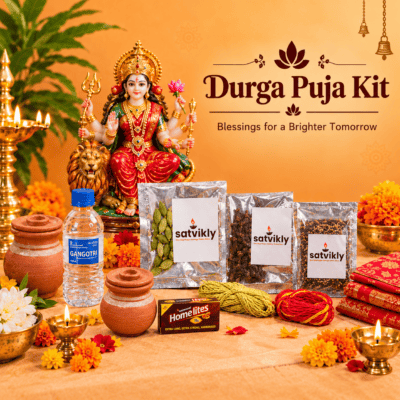
The Durga Puja Kit lists materials for Kalash Sthapana, Devi Puja, aarti and havan. Review that collection when you need supplies for several stages of worship.
If most materials are already available, purchase the missing items individually. Browse the havan samagri collection for individual supplies.
Delivery and Order Support
Review the delivery estimate for your address before ordering. Allow time to inspect the parcel and purchase any additional supplies.
Call or WhatsApp +91 931 178 0821 for product and order questions. You can also email support@satvikly.com with your order details.
Ratings & Reviews
Only customers who have purchased this product can write a review. Log in with the account used for the order.
Frequently Asked Questions
Does the kit include a Pandit Ji service?
A Pandit Ji service is outside the contents of this material kit. Book that service separately when you need someone to conduct the havan.
Can I use it for Chaitra and Shardiya Navratri?
These materials can serve havan preparations during either Navratri observance. Match the contents with the method followed in your home.
Will one kit cover 108 ahuti or all 9 days?
Neither the offering count nor the festival duration establishes a fixed material requirement. Check offering size, ceremony stages and sessions when calculating your quantities.
Can I order 2 kits for a larger havan?
Compare the quantities from both kits with your complete ceremony list. Buy individual extras when only one material needs a larger quantity.
Can fresh coconut replace the dry coconut pieces?
Fresh coconut and dry copra are different forms of coconut. Use the form specified for that particular offering in your havan.
Do I need Navgrah wood for this havan?
Add Navgrah wood when your havan procedure requires that offering. The 9 days of Navratri do not establish that requirement.
Can I offer white sesame during Durga havan?
White sesame can be offered when the selected method permits it. Follow the sesame type and quantity specified for your ceremony.
Can dhoop or wooden humad replace the samidha?
Dhoop batti is incense, while wooden humad can contain wood. Check the wood type and quantity before changing the supplied fuel. Follow the fuel requirements of your chosen havan procedure.
Should I wash the samidha before havan?
Water adds moisture, which can make wood harder to burn. Follow any ritual preparation your ceremony requires, using dry fuel.
Will every samidha stick have the same shape?
Cut wood sticks can vary in shape and thickness. Select sticks that remain within the sides of your kund.
Can I eat the mixture or add it to bhog?
The havan mixture is intended for ritual offerings, not food. For bhog or prasad, choose ingredients with appropriate food labelling.
Do I need the kit if I observe Navratri without havan?
Choose this kit when your worship includes the listed havan materials. Fasting, daily puja and Kanya Pujan have their own supply requirements.
Does the kit include a Maa Durga idol or photograph?
A Maa Durga idol or photograph is outside the kit contents. Purchase it separately when you need one for your puja.
What should I do about a leak, damage or missing item?
Contact Satvikly with your order number and photographs showing the issue. Include the affected material name and the quantity received.
What if I receive a different material?
Contact Satvikly when a delivered material differs from the ordered component. Confirm the required material before using a substitute in your havan.
Can I use the kit for another family havan?
Other havan ceremonies can require different ingredients and offering arrangements. Compare these materials with the procedure selected for that ceremony.
Are Kanya Pujan food and gifts included?
Kanya Pujan food, serving materials, dakshina and gifts need separate purchase. This kit contains the havan materials listed in the contents table.
You may also need
Order Pooja Samagri From Your Phone
Browse pooja kits, save your address, and track every order through the Satvikly app.


 iOS
 Android
Scan to download the app