Dhanteras: History, Puja, Traditions and What to Buy
On Dhanteras, families pray for health, enough food and household wealth. Worship includes prayers to Dhanvantari, Lakshmi and Kubera. Many homes also offer an evening lamp to Yama.
Gold, silver and new utensils are familiar purchases for the occasion. You can also offer the puja using suitable items already at home.
What Is Dhanteras and When Is It Celebrated?
Dhanteras is also called Dhantrayodashi, observed before Diwali Lakshmi Puja. Dhan refers to wealth; teras refers to Trayodashi, the thirteenth lunar day (त्रयोदशी). Krishna Paksha (कृष्ण पक्ष) is the fortnight when the moon grows smaller.
A lunar day, or tithi (तिथि), can cross two calendar dates. Check the festival date and puja time separately.
Select your own city when checking a panchang (पंचांग), the Hindu calendar. Cities across India share IST, but sunset times differ.
Why Do Calendars Mention Both Kartik and Ashwin?
Some calendars begin a new month after the full moon. Other calendars begin a new month after the new moon. The first places Dhanteras in Kartik; the second places it in Ashwin.
Both month names refer to the same festival occasion. Check the lunar date alongside the month when comparing calendar entries.
Dhanteras History: Health, Wealth and the Evening Lamp
Dhanvantari Appears with a Pot of Amrit
During Samudra Manthan (समुद्र मंथन), Dhanvantari emerges from the churned ocean. He wears yellow clothes and holds a vessel filled with amrit (अमृत). In the story, amrit is the nectar of immortality (अमर जीवन का अमृत).
The Bhagavata Purana connects Dhanvantari with Vishnu and medical knowledge. The account names the amrit inside the vessel, without identifying its metal.
Devotees also observe the occasion as Dhanvantari Trayodashi. Prayers to Dhanvantari focus on health and freedom from illness.
Dhanvantari Teaches Medicine in Kashi
The Sushruta Samhita opens with students approaching Divodasa, king of Kashi. The text identifies him with Dhanvantari, the teacher of Ayurveda.
Sushruta joins the students seeking medical knowledge to relieve human suffering. The teaching covers eight branches of Ayurveda, including surgery. Sushruta speaks for the group when the students request surgical teaching. Other branches cover childhood illness and treatment for poisoning.
Medicine has two purposes in the account: treating illness and preserving health. Dhanvantari therefore appears as both a divine healer and a teacher.
Lakshmi Prayers Include Food and Truthful Speech
Lakshmi worship includes wishes for enough food and household prosperity (समृद्धि). The Sri Sukta also asks for freedom from hunger and thirst. Another verse brings truthful speech together with food, cattle and a good name.
You can include these needs in a personal prayer. For example, pray for honest earnings and enough food for everyone at home.
Kubera and the Name Vaishravana
Kubera is the treasurer of wealth in Hindu tradition. Vaishravana (वैश्रवण) is another name used in prayers to Kubera.
A Vedic prayer to Kubera begins with Rajadhirajaya (राजाधिराजाय). It belongs to the Taittiriya Aranyaka, within the Krishna Yajurveda tradition. The prayer honours Vaishravana and asks for wishes to come true.
Yama and the Evening Lamp
Yam Deep Daan (यम दीपदान) is the evening lamp offering to Yama. Families offer the lamp with prayers against untimely death (अकाल मृत्यु). The Skanda Purana places the offering at the entrance during early night.
Dhanteras Puja Samagri: Prepare the Chowki and Thali
Arrange the materials before you begin the evening worship. Group loose offerings in small bowls to make the thali easier to use. Reserve another small plate to collect water used during the puja.
For the worship space
Flowers, rice, chandan and water
Light, fragrance and food
For Kubera worship at a tijori
Some Kubera puja methods use a tijori (तिजोरी) or jewellery box. The box represents Kubera during that form of worship. Add sindoor (सिंदूर) and mauli (मौली) if you choose it.
Does Every Family Need a Kalash?
The short puja below uses a water vessel without a full kalash arrangement. Prepare a kalash when your selected ritual includes kalash worship.
Dhanteras Puja Vidhi at Home
The steps below present a shortened form of home worship. Your family method may include additional prayers and offerings. Prepare those additions before beginning, including any opening prayer to Ganesha.
1. Arrange the Worship Space
Place the pictures securely, with the thali within easy reach. Position flowers and rice towards the front of the plate. Place the water vessel beside the receiving plate to avoid spills.
For tijori worship, mark a swastik with sindoor on the box. Tie mauli around it before beginning the Kubera prayers.
If your custom includes a purchased coin, place it on a clean plate. Remove packaging from any new vessel before using it.
For a framed picture, reserve a plate for wet offerings. Water and paste can damage the picture or its frame.
2. Begin with a Sankalp
Sankalp (संकल्प) expresses your decision to offer the puja. State your name and the purpose of the worship.
For example, pray for family health, sufficient food and honest earnings. Mention anyone you wish to remember during the prayers. Use your own words for the personal prayer.
For a water-based sankalp, hold water, rice and a flower in your right hand. State the purpose, then release the water into the receiving plate. Use a small amount to avoid wetting the chowki.
3. Offer a Flower to Dhanvantari
Place a flower before Dhanvantari and pray for health. You can recite the short prayer below during the offering.
ॐ धन्वन्तरये नमः।
Om Dhanvantaraye Namah.
Meaning: I bow to Dhanvantari.
4. Offer a Prayer to Lakshmi
Place a flower before Lakshmi and offer your prayer. If your household recites Sri Sukta, follow that practice.
मनसः काममाकूतिं वाचः सत्यमशीमहि ।
पशूनां रूपमन्नस्य मयि श्रीः श्रयतां यशः ॥
Manasah kamam akutim, vachah satyam ashimahi;
Pashunam rupam annasya, mayi shrih shrayatam yashah.
Meaning: May our wishes succeed, and may we speak truthfully. May we have cattle, food, prosperity and a good name.
5. Offer Chandan, Rice and Flowers to Kubera
Place a little chandan, rice and a flower before Kubera. For the tijori method, make the offerings before the prepared box. A separate plate protects the surface from wet paste.
ॐ श्रीकुबेराय नमः।
Om Shri Kuberaya Namah.
Meaning: I bow to Shri Kubera.
6. Offer Dhoop and the Indoor Diya
Light the dhoop and indoor diya for the offering. Offer dhoop and the light of the diya before the deities (देवी-देवता). Place the diya and dhoop securely in their holders afterwards.
Position the lamp beyond the edge of any hanging cloth. Allow enough room to reach the flowers without crossing the flame.
7. Offer Bhog and Drinking Water
Place the food before the deities with drinking water alongside. Naivedya (नैवेद्य) is another name for the food offering. Reserve a clean portion before serving the family meal.
For example, transfer some homemade sweet into a small offering bowl. Use a clean spoon and protect the food from incense ash. Place the drinking water separately from the sankalp water.
8. Offer Aarti and Share Prasad
Sing the aarti (आरती) followed in your household, then bow. Share the offered food as prasad (प्रसाद) after the worship. Put jewellery and coins back into secure storage.
Yam Deep Daan: Time, Placement and Prayer
When should you offer the Yam diya?
Offer the lamp during Pradosh (प्रदोष), the evening period around sunset. The Narada Purana places the offering on Krishna Trayodashi during Pradosh.
For New Delhi, Pradosh lasts from 5:33 pm to 8:09 pm on 6 November 2026. Check the Pradosh time for your own city.
Where should you place the lamp?
Place an oil diya outside the entrance on a firm, heat-safe base. Light the wick and offer the prayer to Yama. Position it beside the doorway, outside the space people walk through.
Some families follow a south-facing placement for the lamp. Use that direction if it belongs to your household tradition.
Which prayer can you recite?
The Narada Purana includes a short prayer for the offering. Recite the following words while offering the evening lamp.
यमो मे प्रीयताम्।
Yamo me priyatam.
Meaning: May Yama be pleased with me.
Oil and wick details in the Narada Purana
The Narada Purana passage calls for an oil lamp. The cited instruction specifies neither a particular oil nor a fixed wick count.
An adult should supervise the flame while children join the prayer. Put out the flame safely before leaving the area.
What to Buy on Dhanteras
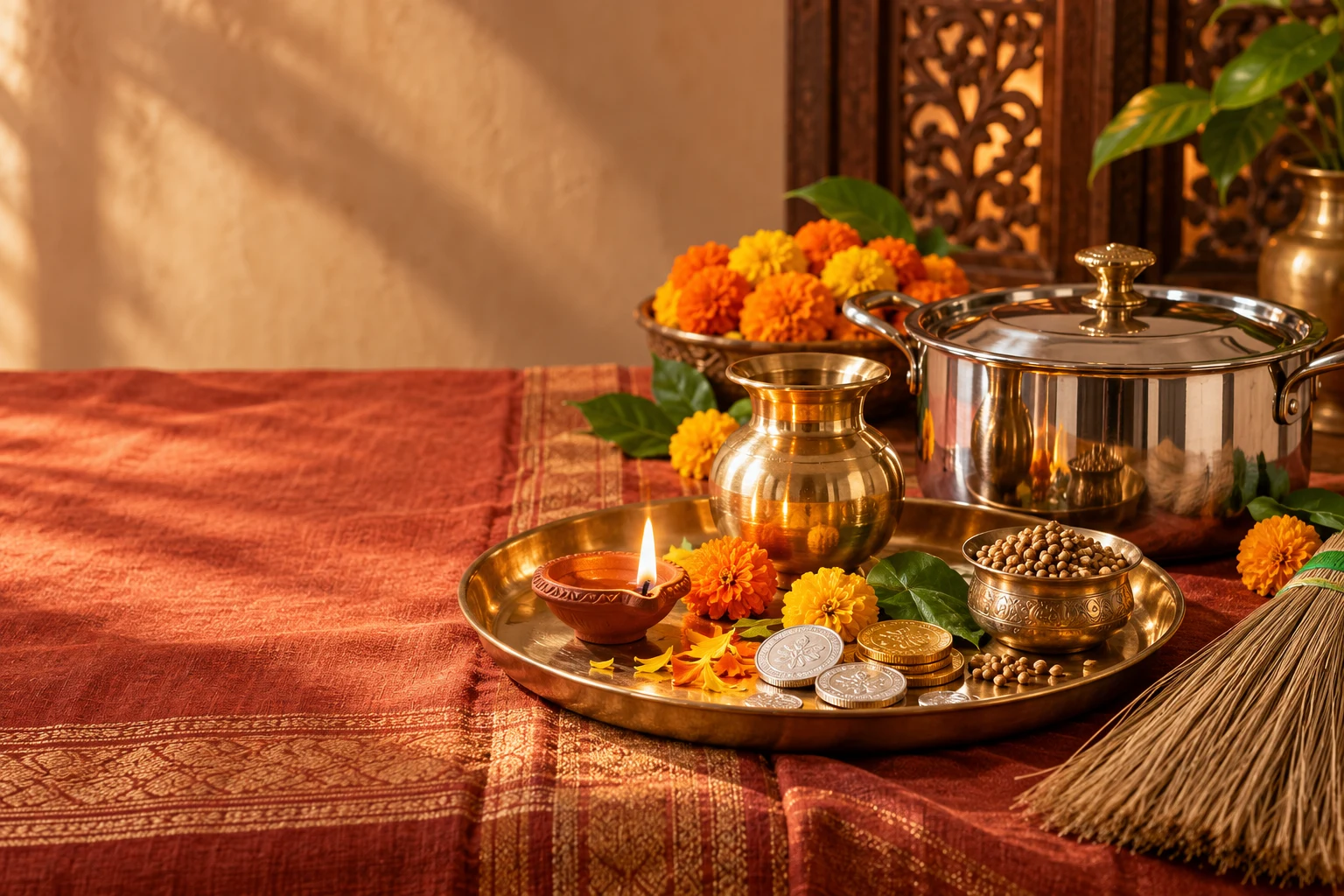
Gold, silver, utensils and brooms are familiar Dhanteras purchases. Some homes also include coriander seeds, salt and worship items. Set a spending limit before choosing among these customs.
Gold and silver
+−
Choose a coin for a small purchase or jewellery for wearing. Coins and bars also suit buyers seeking metal without jewellery designs. Many families connect these purchases with wishes for household prosperity.
A deity coin can join the worship if your custom includes it. Choose a design you want to use during worship.
Utensils and cookware
+−
A lota (लोटा) serves water offerings; a thali holds puja materials. Brass, copper and silver are familiar choices for festive vessel purchases.
Decide between puja use and cooking use before choosing the vessel. Decorative finishes can differ from surfaces intended for food. Ask the seller how you can use the exact item.
Some families place rice, water or food inside a new vessel. Ask which filling your family uses before taking the vessel home.
A broom, or jhadu (झाड़ू)
+−
Buying a broom is another familiar custom during the festival. Some families connect the purchase with prayers for freedom from poverty.
Murtis and deity coins
+−
Choose a murti when you want an image for daily worship. A deity coin can serve an occasional puja or become part of a collection.
Measure the available mandir shelf before buying a new murti. Allow space for flowers and the lamp in front. Existing murtis can remain part of the home worship arrangement.
Whole coriander seeds, or sabut dhaniya (साबुत धनिया)
+−
Buy dry, whole coriander seeds for the dhaniya purchase custom. Fresh coriander leaves serve a different purpose in cooking.
If your family offers dhaniya, reserve that portion in a small bowl. Separate it from the packet intended for everyday cooking.
Salt
+−
Some families include salt among their purchases for the occasion. Choose the type and amount your kitchen already uses. Any separate offering depends on the custom your family follows.
Appliances and vehicles
+−
Festive shopping also includes electronics, appliances and new vehicles. These modern purchases serve household needs beyond the puja. Choose an item you already intend to buy or replace.
If you follow a purchase muhurat, check that activity separately. The evening Lakshmi-Kubera puja window applies specifically to worship.
What about restrictions on steel utensils?
+−
Customs about buying steel differ between households and published accounts. Follow a known family restriction when choosing the vessel.
Dhanteras Vrat and Bhog
Fasting and food offerings serve different purposes
Ekabhakta (एकभक्त) refers to eating one meal during the day. The Narada Purana includes it alongside the Trayodashi evening lamp observance. Follow the meal rules of the vrat you observe.
Bhog concerns the food you offer during worship. Your own meal restrictions and the offered food serve different purposes.
One Dhanvantari puja method includes sweets, milk, curd and ghee. Select the offerings required in your chosen method. A list of possible foods differs from a requirement to prepare every item.
Dhanteras Puja and Diwali Lakshmi Puja
Dhanteras worship and Diwali Lakshmi Puja follow different lunar dates. Their prayers and offerings also differ across the festival days.
Yam Tarpan (यम तर्पण) uses water offerings to Yama. Yam Deep Daan uses a lamp at the entrance. The Padma Purana places the lamp and water offerings on separate lunar days.
Dhanteras Puja Guides
Open the focused guide that matches the next part of your Dhanteras planning.
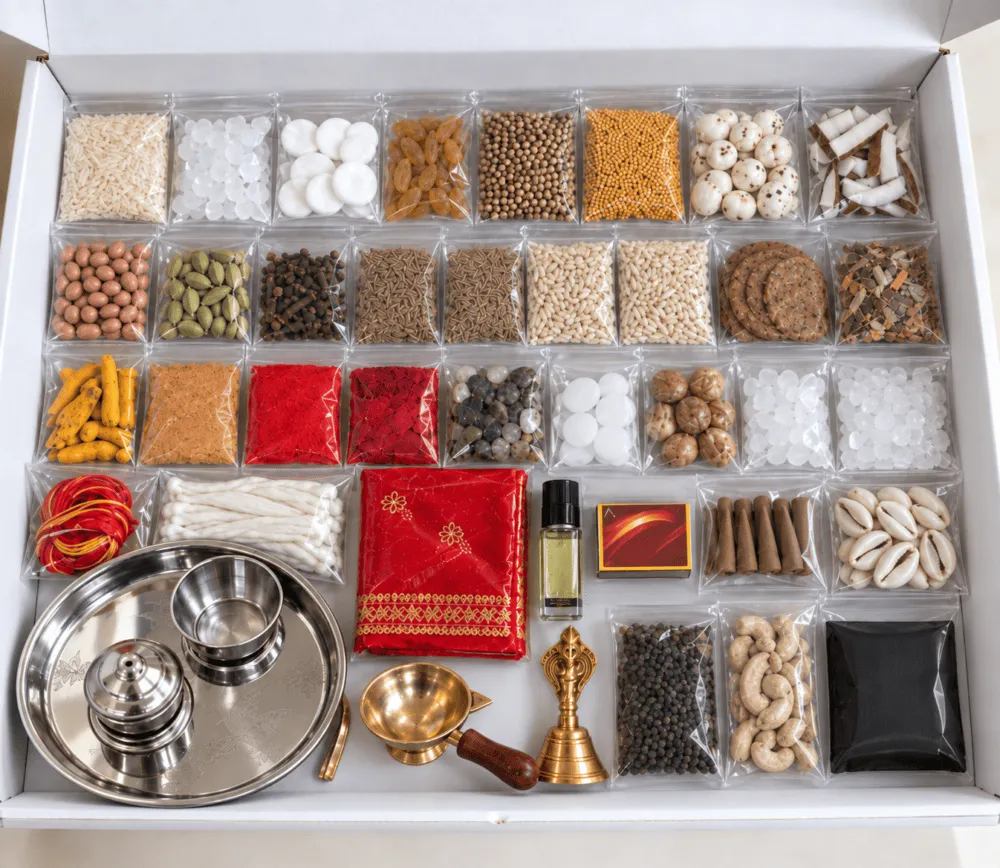
Diwali Puja Kit
Keep commonly used Lakshmi–Ganesh puja materials together and compare the kit contents with your family’s Dhanteras practice before worship.