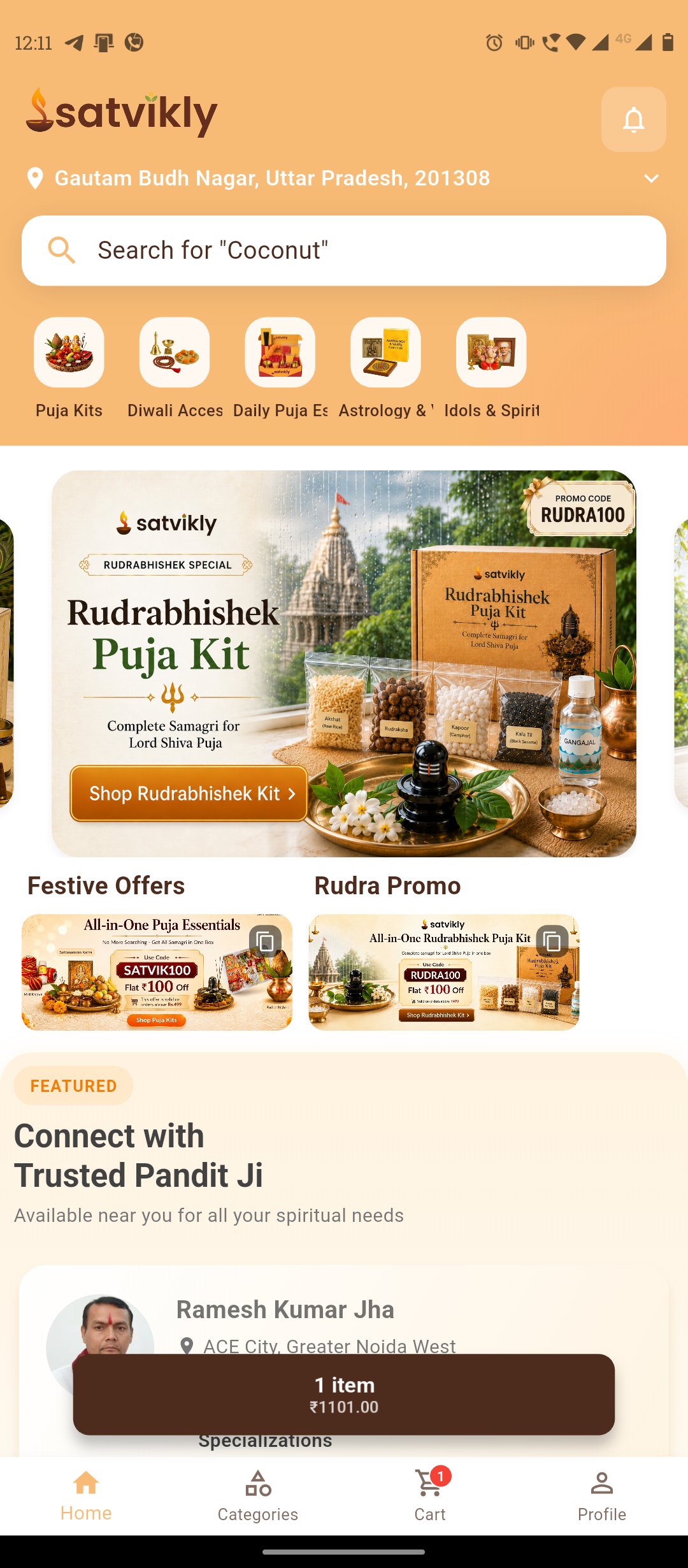
After Diwali Puja: What to Store, Reuse or Remove from the Chowki
After Diwali puja, you can reuse diyas and utensils (बर्तन) that are not broken. You can also wash and reuse suitable cloth. Store unused puja samagri (सामग्री) apart from items already offered during worship.
Start the After-Puja Steps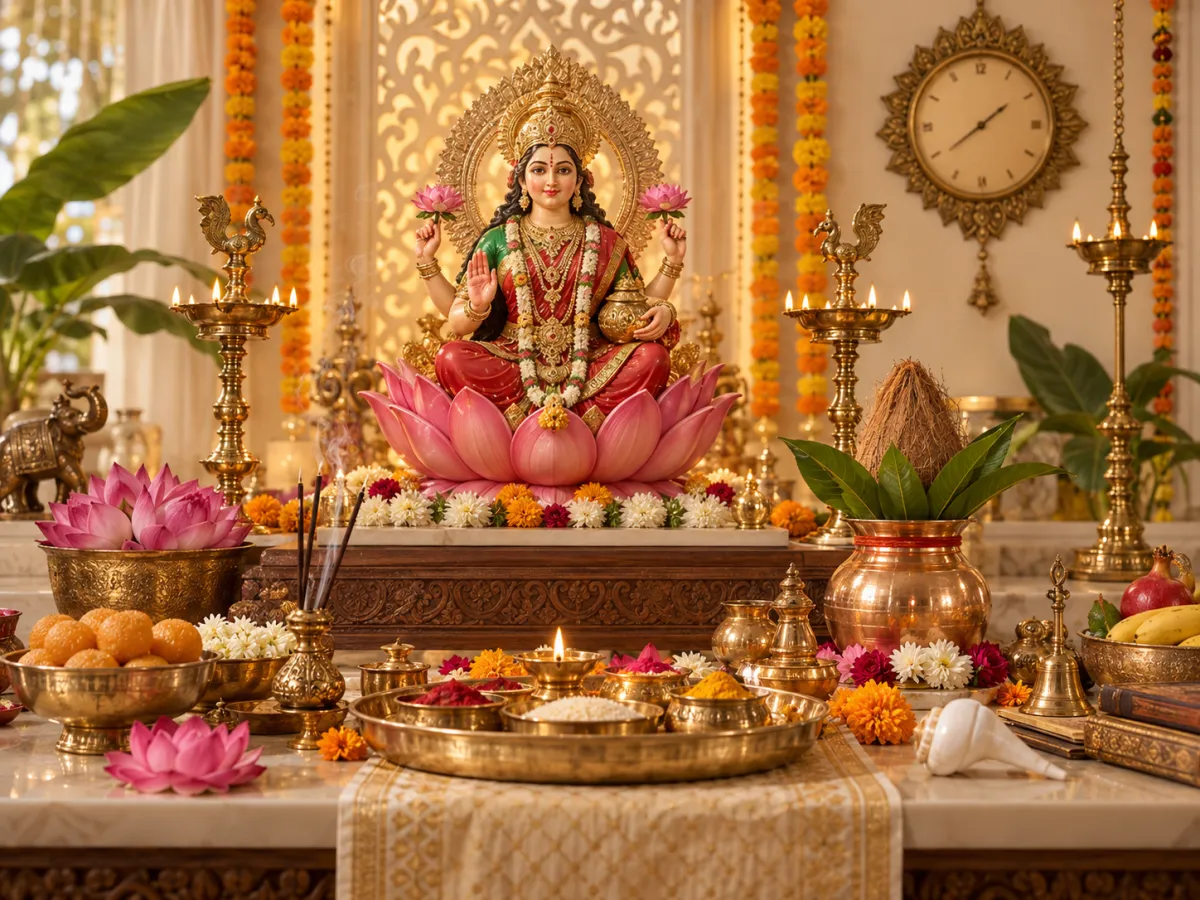
When to Remove the Diwali Puja Chowki
Remove the items from the chowki (चौकी), the low puja table, after worship ends. If your family offers prayers the next morning, finish those first. If worship continues until Bhai Dooj, leave the setup until then.
If you arranged this chowki only for Diwali, finish the closing prayers before removing it. If your puja includes visarjan (विसर्जन), offer flowers and bow during the farewell prayer (विदाई की प्रार्थना). It does not always require placing a murti in water.
Leave murtis used for daily worship in the mandir. Remove dried flowers and spoiled food, even if the festival setup stays. Place fresh offerings for the next puja.
Share and Store Prasad After Puja

Milk sweets, kheer and panchamrit
Share prasad (प्रसाद), the food offered during worship, using clean hands and serving spoons. Put kheer, panchamrit and sweets that need cooling in the fridge after the offering. Limit their total time outside the fridge to two hours. Reduce this to one hour if the room is hotter than about 32°C.
Count the time before and during puja too, not only after aarti. Throw away these foods if the time limit has passed. Putting them in the fridge later does not make them safe.
Panchamrit (पंचामृत) contains milk, curd, ghee, honey and sugar. Share the portion (हिस्सा) that you set aside for eating. Do not serve liquid that has washed over painted or polished murtis.

Dry prasad and fruit
Store clean kheel (खील), batasha (बताशा) and dry fruit in food boxes with lids. The two-hour limit applies to foods that need a fridge. Follow any storage instructions on their packs.
Wash whole fruit before eating, and put cut fruit in the fridge within the limits above. Throw away spoiled food and any portion that has touched lamp oil, ash or puja powders.
Lakshmi-Ganesh Murtis After Diwali
Murtis used for regular worship
Continue your daily worship of Lakshmi-Ganesh murtis (मूर्तियाँ) after the festival. You do not need new murtis just because Diwali has ended. If the murti had a pran pratishtha (प्राण प्रतिष्ठा) ceremony, ask a priest (पंडित जी) before ending its worship.
Murtis used only for the festival
If your family stores the festival murtis for reuse, check for damage first. Wipe painted surfaces gently with a soft, dry cloth. Wrap each dry murti in soft cloth before placing it in a box.
If your family tradition (परंपरा) includes placing the murti in water, check its material first. A small, unpainted murti made from clay that has not been baked can soften in water. Remove cloth, jewellery and decorations, then place this plain clay murti in a bucket of water.
After the murti breaks down, let the clay sink to the bottom. Slowly pour out the water above the clay. Dry the clay if you plan to use it again.
You can add the plain clay from the bottom to garden soil. Use only the water the plants need. Avoid this use if the murti or water contained paint, glue, glitter (चमकी) or puja powders.
For painted or plaster (प्लास्टर) murtis, ask the local council office (नगरपालिका) where to take them. Check that the same place accepts resin (रेज़िन) murtis before taking those too.
Pictures and broken murtis
Wipe framed pictures without wetting the print or paper at the back. If you store a picture, wrap the dry frame to protect the glass.
Place broken murti pieces in a strong box and cover sharp edges. For a murti used in worship, ask a priest about ending that worship. Check that the temple or collection centre (संग्रह केंद्र) accepts it before taking it there.
Restock Puja Essentials for the Next Worship
Check what can be reused, then compare the remaining items with the Satvikly Diwali Puja Kit.
View Diwali Puja Kit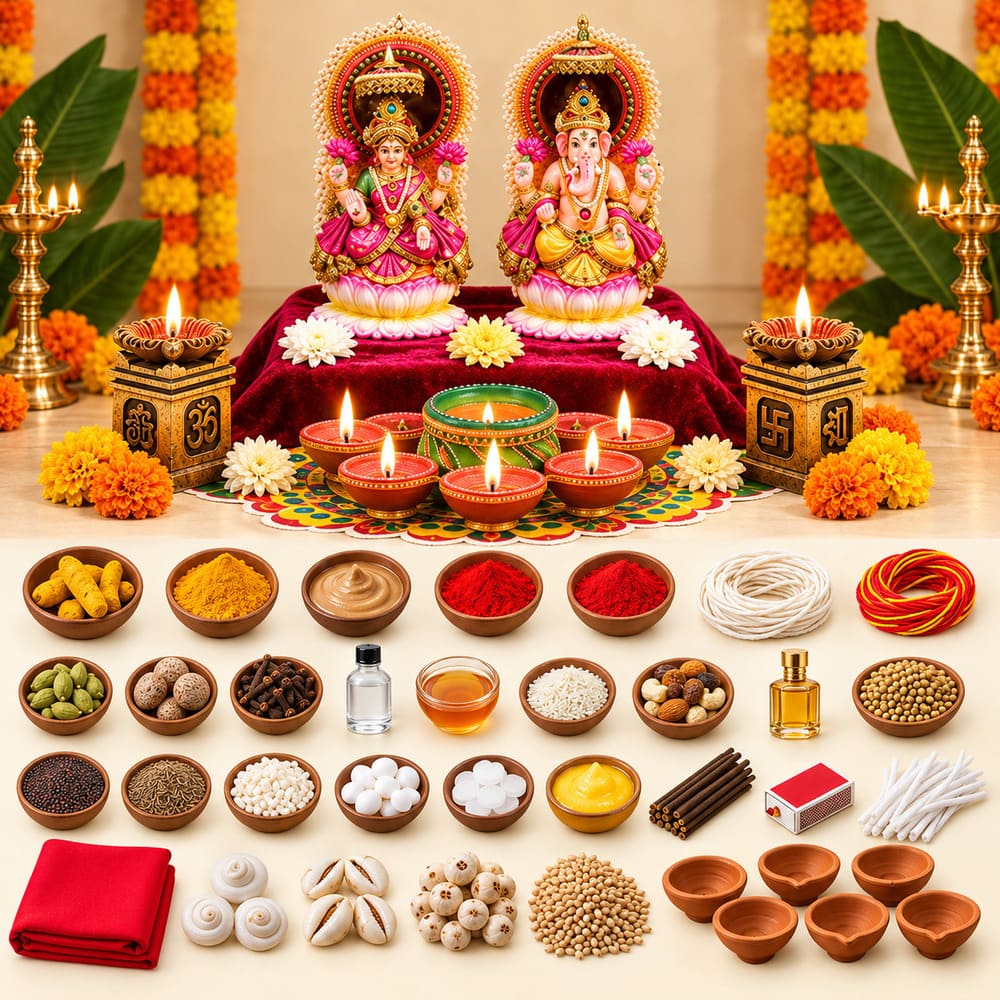
What to Do with the Kalash Water and Coconut
Once the kalash (कलश) worship ends, lift off the coconut and leaves. Lift out any coin or supari, and collect loose rice separately. Place wet items on a tray before sorting them.

Kalash water
You can use plain kalash water for a plant if your family follows this practice. Pour only as much as the plant needs. Water containing perfume, lamp oil or colours with unknown ingredients should not go into plants.
If you do not know what the water contains, do not drink it. Also avoid drinking it if the vessel or water was not clean. Ask the local waste helpline (कचरा निपटान हेल्पलाइन) where to discard water mixed with oil or colours.

Coconut
If your family shares the kalash coconut as prasad, open it after worship ends. Check the white flesh (गिरी) before eating, and avoid getting puja powders on it. Throw away coconut with mould (फफूँद), a bad smell or rotten flesh.
If your family stores the coconut, choose a dry place. Check the stored coconut regularly, including under any cloth around it.
A laghu nariyal (लघु नारियल), or small ritual coconut, may be sold only for puja. Check the pack or ask the seller before treating it as food.
Sort the kalash leaves with the used flowers. Clean and dry the empty pot with the other puja utensils.
Rice, Supari, Coins and Other Small Puja Items
Rice and akshat
Akshat (अक्षत) is whole, unbroken rice used during worship. Close the packet of unused rice and store it dry. Collect rice from under the kalash separately.
If your family cooks offered rice, use only plain rice bought for cooking. The rice must have stayed clean and away from puja powders, oil and ash. If you do not know what touched the rice, leave it out of food.
Never cook rice mixed with kumkum (कुमकुम), lamp oil or ash. Do not feed that mixture to birds or animals.
If your family saves offered rice, store clean, dry grains in a separate container. For offering rice again, ask a priest who knows your family puja customs.
Supari

Supari (सुपारी), or betel nut, can stand for Ganesh during puja. If you used it this way, complete that worship before removing it.
If your family saves that supari, dry it and store it separately. Before using the same supari for Ganesh puja again, ask a priest about its reuse. Unused supari can stay in its original dry packet.
Coins, jewellery and shells

Remove loose rice, then wipe wet coins and jewellery dry. Return them to a closed pouch (थैली), box or locker.
Store kaudi (कौड़ी) and Gomti chakra (गोमती चक्र) dry in a separate pouch. Avoid sealing them with wet flowers, leaves or damp rice.
Yantras and charan paduka

Leave yantras (यन्त्र) in the mandir if you worship them there. Charan paduka (चरण पादुका), the small footprints used in worship, can stay there too. Wipe printed or painted pieces gently without soaking (भिगोना) or scrubbing (रगड़ना) them.
Reuse Diyas, Puja Utensils and Cloth

Diyas
Put out diyas and incense sticks (अगरबत्ती) before leaving the room or going to sleep. If a lamp burns overnight, someone must stay awake beside it. Let the diya cool fully before removing the wick (बाती) and leftover oil.
You can reuse a clay diya that has no cracks or leaks. Wipe away loose soot (कालिख) and oil before putting the diya away. After any washing, dry the diya fully before storage or lighting.

Thali, kalash, bell and other utensils
Remove oil, rice and flower pieces before cleaning the utensils. Wash plain stainless-steel utensils with mild dishwashing liquid (बर्तन धोने का तरल साबुन). Rinse with water, then dry them.
Wipe painted items gently with a soft cloth to remove loose dust. Use the same method for items with a metal coating (धातु की परत). Avoid lemon, vinegar (सिरका) and rough scrubbers on these surfaces. If you do not know the type of coating, ask the seller before using metal polish.

Chowki cloth and chunari
Check the cloth folds for coins, pins and jewellery first. Shake loose rice and flower petals (पंखुड़ियाँ) over a tray, then sort them. Read the washing instructions on the cloth label, if present. For cloth with glued decorations, ask the seller before soaking it. Fold it after it has dried fully.
Store a reusable chunari (चुनरी) with the clothing used for worship. If you want to give it to a temple, ask before taking it there.
Restock Puja Essentials for the Next Worship
Check what can be reused, then compare the remaining items with the Satvikly Diwali Puja Kit.
View Diwali Puja KitRemove Flowers, Used Wicks and Ash Separately
Flowers and leaves
Remove thread, staples, foil and plastic from flowers and leaves. Add flowers and leaves without glitter, paint or lamp oil to a compost bin (खाद का डिब्बा).
Without a compost bin, ask your housing society or local council about flower collection. A temple may accept flowers, but check first. If no separate collection exists, ask your waste collector which bin accepts them.
Also ask which bin accepts spoiled coconut and plain used rice. Do not leave bags of offerings or unwanted cloth outside temples or beside rivers.
Used wicks and oil
Collect cold, used wicks separately from flowers and unused cotton. Leave oily wicks, leftover ghee and milk mixtures out of home compost.
Store unused oil in its original bottle with the cap closed. Follow the storage instructions on the bottle.
Throw away lamp oil mixed with water, ash or flower pieces. Never pour oil from a used diya back into cooking supplies. For oils such as sesame oil (तिल का तेल), wipe small amounts from the cold diya with paper.
Havan and agarbatti ash

Let havan ash (हवन की राख) and agarbatti ash cool completely before touching. Do not add mixed puja ash to plant pots as fertiliser (खाद). Too much wood ash can make it harder for plants to take in nutrients (पोषक तत्व).
Ask your waste collector how to pack cold ash, used wicks and oily paper. If the collector accepts the ash, bag it so it cannot blow around.
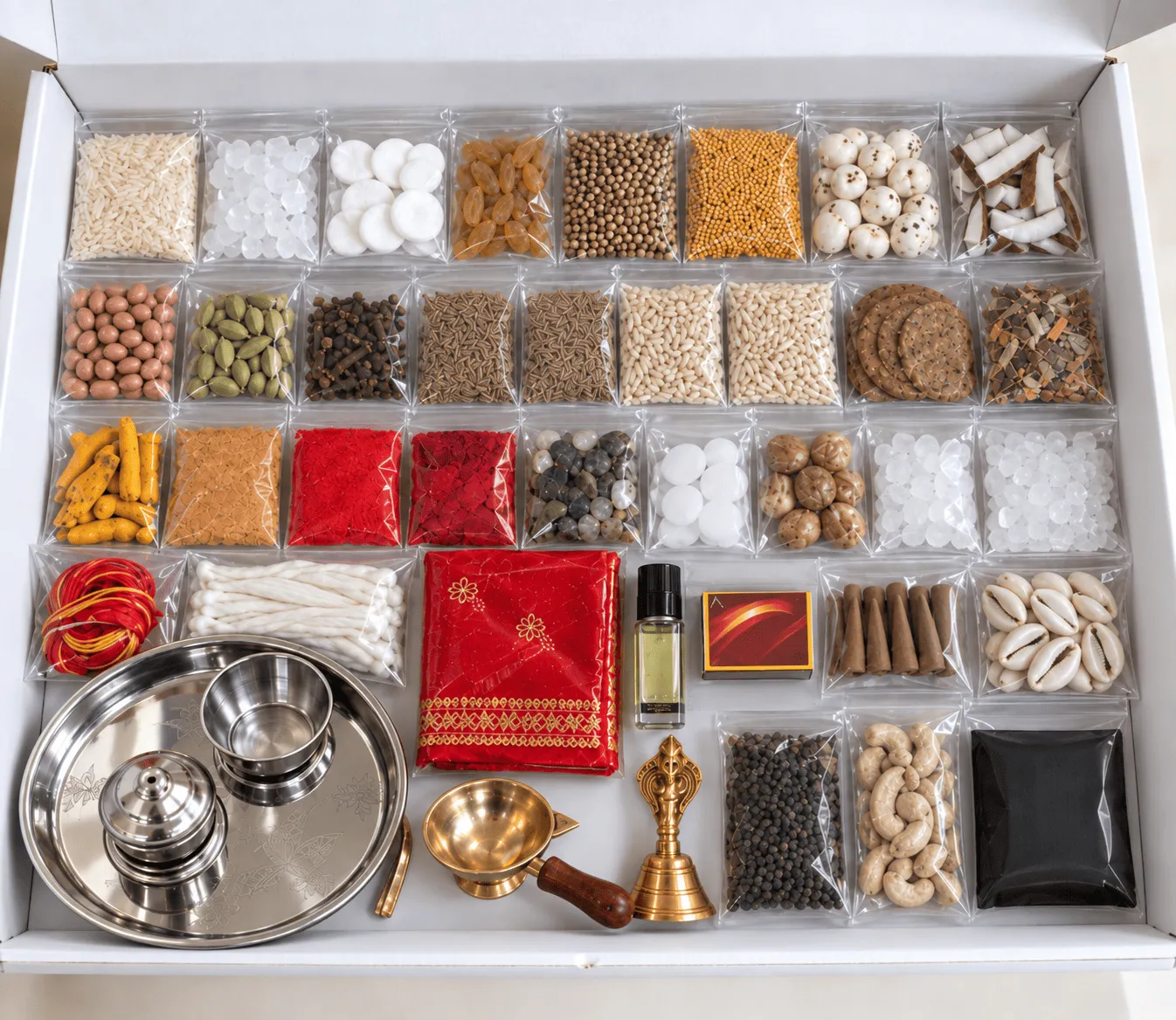
Store Unused Puja Samagri
Close packets and bottle caps before returning unused supplies to storage. Follow the storage instructions and dates on each pack. Write the item name on any box without a label.
Store food items apart from dhoop (धूप), camphor (कपूर) and perfume. Store cotton wicks, agarbatti and matches in a dry place.
Store unused chandan (चन्दन) powder in its dry packet. Avoid adding leftover wet paste to it. Check stored supplies before the next puja and throw away anything with mould or insects.

Clean the Chowki After Removing the Items
Wipe loose dust and petals from the empty chowki with a soft cloth. If the surface allows wiping with water, squeeze the cloth before using it. Let the surface dry before storing the chowki or replacing its cloth.